
Project Planning
Aggregate Calculator
Estimate material in cubic feet, cubic yards, tons, and truckloads for common construction and landscape projects. Enter your dimensions below and the calculator will convert depth, calculate volume, and estimate tonnage based on the material selected.
Every project starts somewhere, and we’re here to help you along the way. Use our aggregate calculator to estimate the amount of material your project may require. Need help confirming your numbers? Our team can double-check your estimate and make sure you get the right amount. Bedrock Holdings Group, LLC is proud to be a trusted local supplier serving Linn County with high-quality materials for residential, commercial, and contractor projects.
3/4" Minus Crushed Rock
3/4" crushed rock is a versatile aggregate frequently used in landscaping and light construction projects. Begin by measuring the length and width of the area you plan to cover and determine the depth of rock needed, typically between 2 and 4 inches for paths or decorative ground cover. This size of crushed stone offers a balance between stability and drainage, making it ideal for walkways, garden borders, landscape beds, and smaller residential driveways where a clean, durable surface is desired.
1.5" Minus Crushed Rock
1.5" crushed rock is commonly selected for projects that require a stronger, more durable surface. To estimate the quantity needed, record the dimensions of the project area and choose a depth appropriate for the job, often 3 to 6 inches for driveways or parking areas. Because of its larger size and stability, it can also be used in landscaping projects as decorative ground cover, drainage rock, or in areas where a heavier stone is preferred for visual texture and durability.
3" Minus Crushed Rock
3" minus crushed rock contains a blend of larger stones and smaller particles that compact tightly when installed. Begin by determining the total square footage of the project area and the desired depth of coverage, usually around 4 to 8 inches for foundational layers. Because of its ability to compact firmly, this material is frequently used as a base for driveways, patios, landscape hardscaping, construction pads, and access roads.
1.5" Open Rock
1.5" open crushed rock is a clean aggregate with minimal fine material, allowing water to move freely between the stones. When planning a project, measure the length and width of the area and determine the depth required for adequate drainage, which can range from several inches to a foot depending on the application. This rock is commonly used in French drains, behind retaining walls, septic systems, and landscaping drainage areas where proper water flow is essential.
Jaw Run
Jaw run is a raw crushed material that contains a wide range of particle sizes, allowing it to compact into a very solid surface. To calculate how much is needed, measure the project dimensions and select a depth that provides the support required for your application. Jaw run is often used as a base for roads, driveways, equipment yards, patios, and landscape hardscaping projects where a strong and stable foundation is important.
Riprap
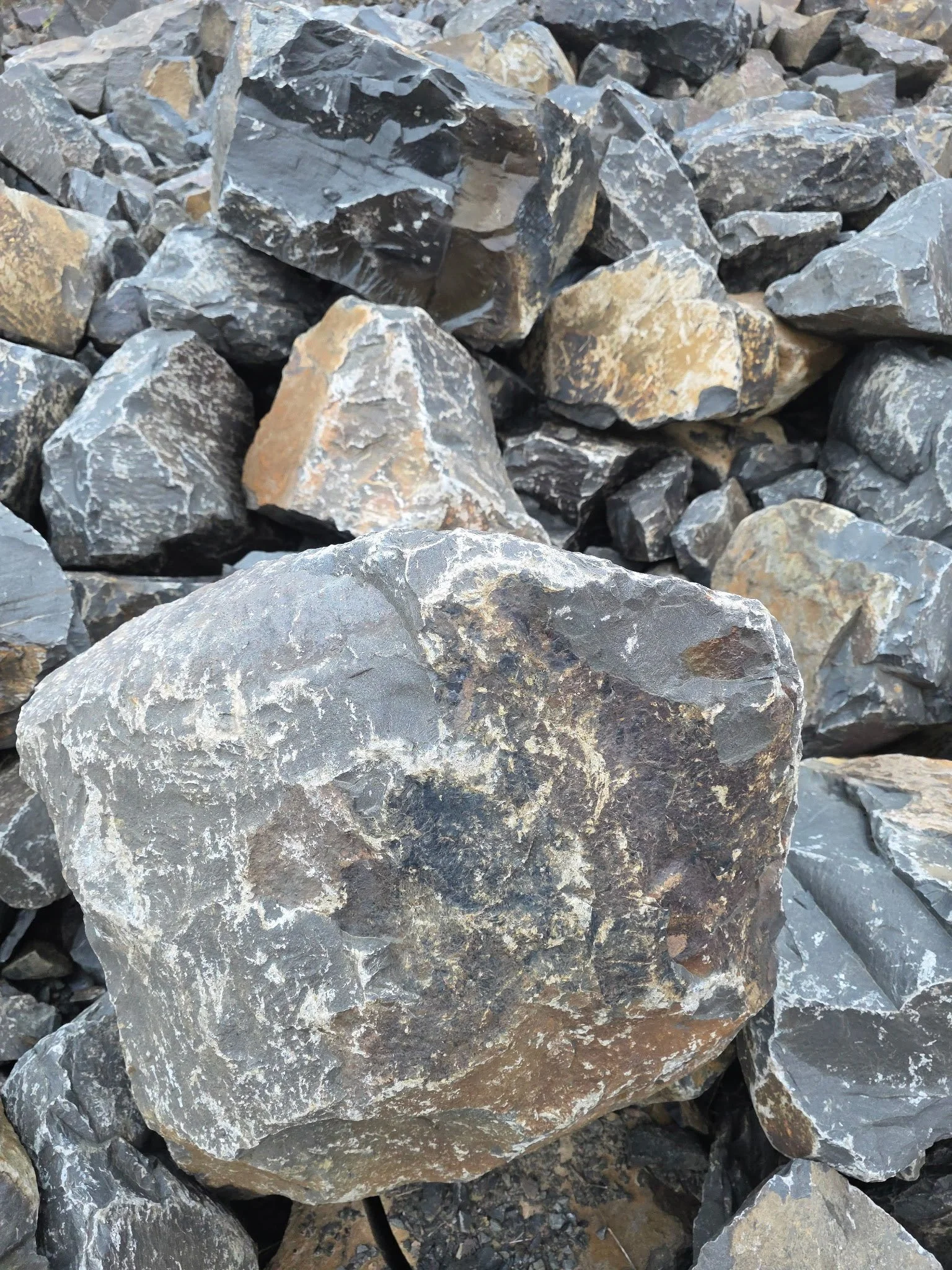
Riprap consists of large rock pieces designed to protect soil and structures from erosion. To determine the amount required, measure the length and width of the area needing coverage and establish the thickness of the rock layer, which is often substantial due to the size of the stones. Riprap is commonly installed along waterways, drainage ditches, culverts, slopes, and shoreline areas, and is also used in landscaping projects to stabilize hillsides, swales, and other areas prone to erosion.
Topsoil
Topsoil is a nutrient-rich soil layer used to improve growing conditions for plants and lawns. Begin by measuring the dimensions of the landscape area and deciding how thick the soil layer should be, typically between 2 and 6 inches depending on the project. It is widely used for lawn installation, garden beds, landscaping projects, grading work, and areas where healthy soil is needed to support plant growth.
Fines Only
Fines are very small crushed rock particles that create a smooth, compactable surface when installed. To estimate the volume needed, measure the total area and determine the thickness of the layer, which is commonly kept relatively shallow. This material is frequently used for pathway surfaces, patio and paver bases, and landscaping areas where a level, compacted surface is needed beneath other materials.
Asphalt Grindings
Asphalt grindings are reclaimed asphalt materials produced from recycled road surfaces. To estimate the quantity needed, measure the dimensions of the project space and determine the depth of coverage appropriate for the intended use. When spread and compacted, asphalt grindings can form a durable surface and are commonly used for rural driveways, access roads, parking areas, and temporary construction routes.